GANESHASHALA® · Gabriella Rist To the course — €59
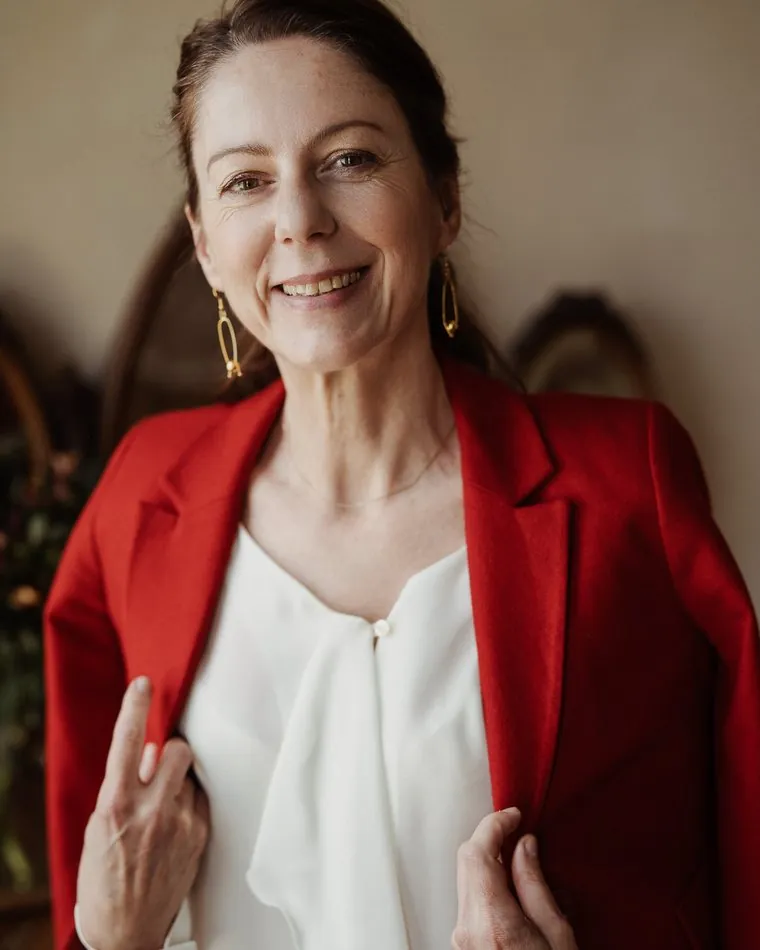
Gabriella Rist, GANESHASHALA® Online Trauma Academy, educator for the nervous system and neurosomatic trauma support, in a red blazer in front of an old mirror, smiling
The Nervous System Course · the academy’s foundation course

How to calm your nervous system and regulate it again in everyday life

The Nervous System Course for developmental trauma

An exhausted, dysregulated nervous system stays stuck in tension or exhaustion, even when nothing is pending any more. The Nervous System Course by Gabriella Rist shows you in five modules how to recognise your nervous-system state and regulate it with ten tools your body already has — for people with developmental trauma and CPTSD. €59, one-off.

Start straight away€59 one-offAccess that does not expire47 lessons in five modules

Book today and you can start straight away. All five modules open at once.

As featured in
Articles by and with Gabriella Rist in Tattva Viveka, Freie Psychotherapie (VFP), Tagesspiegel Background, Ayurveda Journal, in the Expertenportal and on Hauptstadt.TV
The Nervous System Course at a glance

Five modules, your own path

  • 5modules – from recognising to acting
  • 47lessons, 58 videos, around five hours
  • 10tools your body already has, each with its own lesson
  • 10worksheets: 7 for the course, 3 as a bonus
  • 51,300people follow Gabriella Rist on YouTube

Everything opens immediately, with no expiry date.

What will I learn in the Nervous System Course?

The Nervous System Course is the online entry-level course of the GANESHASHALA® Trauma Academy, in which you learn to recognise your nervous-system state and to regulate it with ten tools your body already has. Gabriella Rist guides you in five modules from the map to the Self-Help Matrix and the breath through to the emergency kit. It includes 47 lessons, 58 videos and ten worksheets, for €59 as a one-off payment, with permanent access. The English voice-over was created with AI from Gabriella’s own voice.

What you will learn in the course

  • The foundations of the nervous system – how your survival system works, why the body stays on alert, and the wisdom behind fight, flight, freeze and fawn.
  • Recognising nervous-system states in everyday life – the thermometer, the six stages of the defence cascade and the map of your nervous-system states.
  • Ten tools your body already has – from breathing, movement and sensory perception to thoughts, inner attitude and relationships, plus three breathing exercises and three sequences from trauma-sensitive yoga, assigned in your Self-Help Matrix and in the skill chain for hard days.

Regulating the nervous system: the exercises in the course

  • Body exercises – pendulation, shaking off, tapping and torso circles.
  • Breathing exercises – fullness of breath, emptiness of breath and alternate nostril breathing, plus three sequences from trauma-sensitive yoga for your own practice.
  • Perception and inner tools – sensory perception, thoughts, images and nature, intuition and inner attitude.
  • For hard days – skill chains, a morning routine and a daily ritual; the shortest exercise takes 90 seconds.
  • To keep going – the practice log for 21 days, the Thermometer Card and the Self-Help Matrix.
As featured in Tagesspiegel Background Dr Gunther Schmidt, Milton Erickson Institute Heidelberg, on Gabriella’s book »Neubeginn jetzt«: “… a wellspring of strength for hope …” Diploma in Neuropsychology (Centre of Excellence), 2019 Traumatic Stress Studies (TRF) · van der Kolk Complex Trauma (CCTP / CCTP-II) · Janina Fisher IFS Trauma Treatment · Frank Anderson Somatic Experiencing® · Peter Levine Yoga therapy & Ashtanga (AYI® Advanced) Relaxation educator (ZPP-certified, Germany) 70,000+ on YouTube, Instagram, LinkedIn and Facebook AZAV education provider in Germany (accreditation in progress)
Two states in the body

What many people know as everyday life – and what becomes possible with the Nervous System Course

The body in permanent operation

  • In the evening something in you keeps running, even when nothing is objectively going on
  • Sleep comes late and leaves early – and in the morning you are more tired than the night before
  • Tension sits in your jaw and shoulders, for no reason
  • Sometimes everything feels wrapped in cotton wool: you are there, and yet not quite
  • Books, videos, single exercises – many pieces of a puzzle that do not yet make a picture
  • And perhaps a slip of paper with a number you may call again in four months’ time

The body with a compass

  • You can name the nervous-system state you are in right now
  • You recognise the wisdom behind your reactions
  • From ten tools, you choose the one that fits this nervous-system state
  • Your breath is available everywhere – even at four in the morning
  • You have a plan for the hard days before they come
  • You know where other people can contribute to regulation
To this day, your body is waiting for the message that it is over. And that message can still be delivered.

What you have tried so far made sense in most cases. Usually only the matching was missing. A good tool at the wrong moment does the opposite – shaking off drives a body under high tension further up, a deep breathing exercise can deepen a freeze. That is why this course begins with a map, and the exercises come only after that.

To the course – €59
Five modules · all open immediately
A woman sitting by the window, one hand on her heart, the other on her belly
Arriving again

The body acted wisely. Now it may learn that the room is safe.

Your path

The map

Five stations, in this order. Each builds on the one before.

01 Wo stehe ich? 02 Selbstregulation unddie zehn Werkzeuge 03 Warum Ihr Körper so reagiert 04 Der Atem als Herzschrittmacherder Psyche 05 Der Notfallkoffer

Station 2 is the largest; this is where the heart of the course lies. First your body learns to feel safe, then comes understanding.

To the course – €59
All five stations open immediately
What it is about

Regulation – autonomous and conscious

A nervous system that was allowed to grow up without severe strain regulates itself. It powers up when something is due, and down again afterwards – without anyone doing anything. That is nervous-system regulation, and it works autonomously.

After early or ongoing strain, this autonomous ability is lost. The body powers up and stays up. Or it powers down and stays down. What used to happen by itself now waits for a signal from outside.

This is where self-regulation begins – the conscious path. You recognise which nervous-system state you are in, and you give your body, from outside, the signal it cannot find from inside right now: through the breath, through movement, through muscle tone. And with practice something remarkable happens – what you first do consciously, your body’s intelligence gradually takes over again.

Nervous-system regulation

The autonomous ability. The body regulates itself without you thinking about it – tension rises and releases again. After early strain, exactly this is lost, and the inner guard stays on duty.

Self-medication

A glass of wine in the evening, the phone until two in the morning, work to the point of exhaustion. A clever solution – it works at once, and for many people it was, for years, the only thing available. Its price shows later: the dose grows, the effect lasts less long.

Self-regulation

The conscious path, and the subject of this course. You recognise the nervous-system state and choose the tool that fits it. Available everywhere, costs nothing – and paves the way back to autonomous regulation.

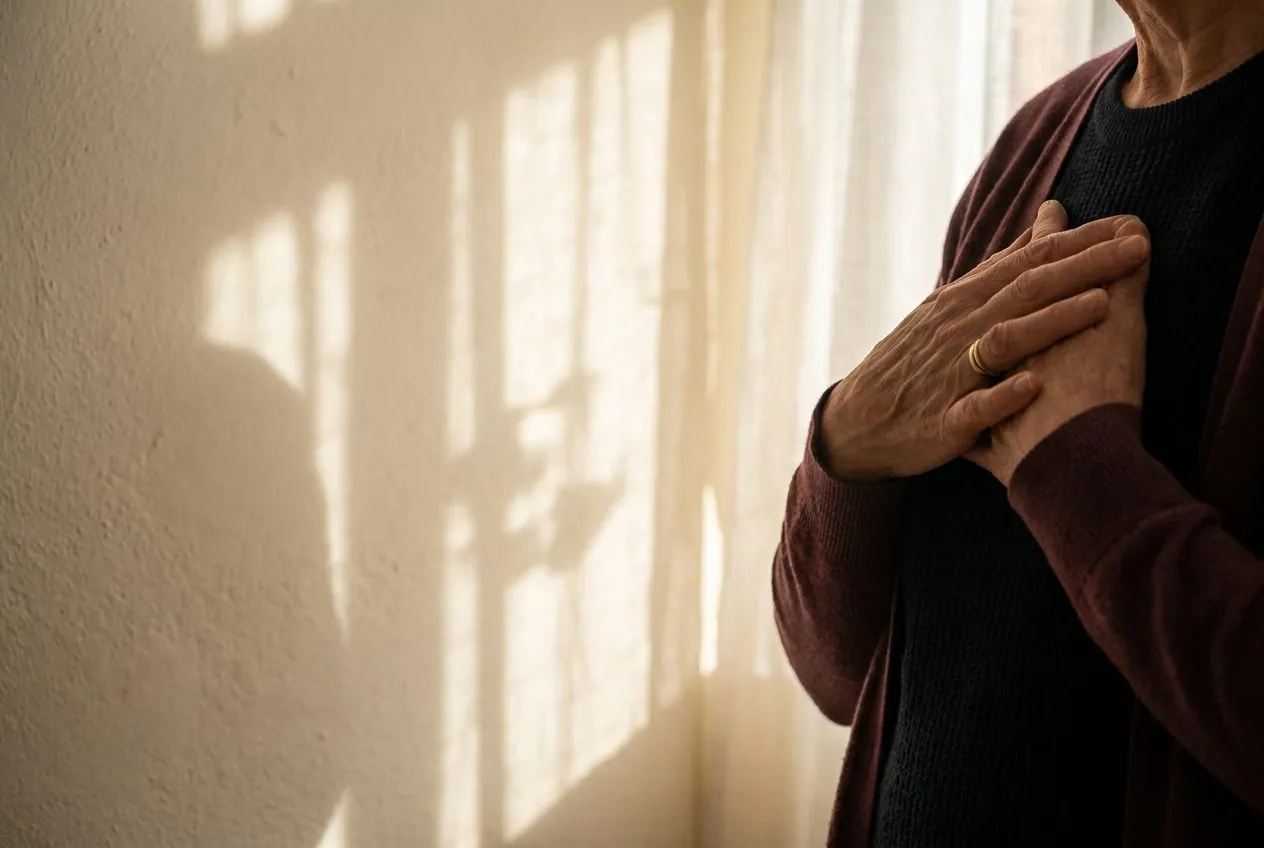
Two hands resting on the breastbone in warm daylight
From the book “Neubeginn jetzt”

“Every breathing exercise, every moment of self-observation, every moment of safety lays down a new track: quietly and slowly, and yet effective right into the body.”

Gabriella Rist

Module 2 begins with five lessons on exactly this distinction – what separates self-regulation from self-medication, how it works in the body, and how you notice that it is taking hold. Only then come the ten tools.

To the course – €59
Ten tools · the shortest exercise takes 90 seconds
Who this course is for

Perhaps you recognise yourself here

Shoulders releasing in warm daylight

People who function on the outside

Often better than average – while inside they carry a body that has found little rest for years.

People with a diagnosis

CPTSD, developmental trauma, depression, an anxiety disorder – and the feeling that knowing about it has changed little in everyday life so far.

People on a waiting list

Who hold a slip of paper with a number and, in the meantime, a body that is exactly where it was before.

People who have already tried a lot

Books, videos, single exercises – and who suspect that what they are missing is the order.

Professionals and companions

Who work with traumatised people and would like to widen their repertoire of body-based tools.

Relatives

Who would like to understand what happens in the body of someone they accompany – and what co-regulation can contribute.

And if, while reading, you notice that something else is needed right now: that is a good decision, and it deserves the same respect. The course will not run away.

To the course – €59
Access for good · no follow-up costs
From practice

Why so many people get stuck on the way back into life

It is almost always the same four places where the path stalls. I have been meeting them in the academy for years – in people who give everything they have. And all four lie in the matter itself.

Reason 1

The missing match

Good tools at the wrong moment. Shaking off under high tension, a deep breathing exercise in the middle of a freeze. The tools were right – the map was missing.

→ Module 1 and the matrix in Module 2
Reason 2

The myth of relaxation

Of all moments, it gets worse in the silence. The body becomes restless as soon as things become quiet. For a survival system that has confused vigilance with safety, letting go at first feels like danger. Once you know this about yourself, you stop judging yourself for failed attempts at meditation.

→ Lesson 1.6
Reason 3

Going deep too early

Some people go straight to the hardest topics with great courage – childhood, shame, the old wounds – while their nervous system is still on alert. Then the body closes. It becomes harder instead of easier, and courage is punished instead of rewarded. First the ground needs to carry weight; then the work in depth begins.

→ the structure of the whole course
Reason 4

Staying alone

A nervous system that was hurt in relationship regulates most deeply in relationship. Many people try the whole path alone, with books and videos, each for themselves – and get exactly as far as the point where company would have been needed.

→ Lesson 2.4, co-regulation
The content

Five modules – from recognising to acting

01

Where am I right now?

Why am I not doing well, and what helps me at once?

Tuning in “I am not doing well, and I do not know why.”

First aid for the beginning, taking your temperature with the Thermometer Card, the Goldilocks Principle and your personal stocktaking. At the end you have a name for what is happening inside you right now.

6 lessons · 11 videos

Welcome · First aid after a diagnosis · Is it all right if I feel worse? · Post-traumatic stress workshop

02

Self-regulation and the body’s own ten tools

How can I change my nervous-system state myself?

Safety in your own body “I can change my nervous-system state myself.”

The centrepiece: first the basics of self-regulation, also in relationship, then the ten tools, at a glance and one by one, and the Self-Help Matrix, which shows which one fits when.

17 lessons · 12 videos

The basics of self-regulation · Basic techniques of self-regulation · Self-regulation and the vagus nerve

03

Why your body reacts the way it does

Why does my body react so strongly? Why am I sometimes flooded, and sometimes feel nothing at all?

Understanding and making sense “I am not wrong; my nervous system is protecting me.”

The family of origin and the origin of today’s symptoms, then fight, flight, freeze, fawn — and the wisdom behind each of these patterns. At the end you understand how cleverly your survival system acted.

7 lessons · 17 videos

What happened · Stress responses, the cascade, fixed responses · Stress in the brain, dissociation, flashbacks · Triggers · Why feelings and needs are so hard to sense

04

The breath as the pacemaker of the psyche

How can my breath carry me when everything is too much, or when there is only emptiness in me?

Deepening “My breath is always with me, and I can use it.”

Three breathing exercises — fullness of breath, emptiness of breath, alternate nostril breathing — and a body practice from trauma-sensitive yoga with three sequences, inspired by Dr Bessel van der Kolk and David Emerson. A pacemaker you carry with you everywhere.

10 lessons · 9 videos

Pranayama, fullness of breath, emptiness of breath, alternate nostril breathing · Trauma-sensitive yoga for your own practice

05

The emergency kit for everyday life

What helps me in emergencies, in freeze and in shutdown?

Changing “I know what helps me, even when it gets hard.”

Skill chains for the hard days, a morning routine and a daily ritual that fit your life. At the end you have a plan before you need it.

7 lessons · 9 videos

Emotion regulation A–Z · Resources and routines · What comes next

+

Ten worksheets

Ten worksheets, seven for the course and three as a bonus, to print and fill in, because it makes a difference to a nervous system whether the hand writes or types.

to download in the members area

47lessons
~5 hrsof video
90 secshortest exercise
For goodaccess, complete from day one

Everything is open from the first day – so that you have the emergency kit in your hand when you need it, and not only in week five. There is no homework, there are no appointments and no expiry date: the course is yours. And if you take a three-month break, it will wait for you.


The result

What you will be able to do at the end

Six abilities that you acquire step by step and that stay with your nervous system, whatever comes.

Name your nervous-system state

Place within a few seconds where your nervous system is right now – using the thermometer and the six stages that you feel in your own body.

Choose the fitting tool

From ten tools your body already has, reach for the one that fits this nervous-system state – instead of the one that helped last time.

Read your own Self-Help Matrix

You know which tool works for you. Your Self-Help Matrix looks different from anyone else’s, because it has grown out of your own observations.

Select the right breathing exercise

Breathing exercises from trauma-sensitive yoga – and the knowledge of which one carries you right now: one is activating, the other calming. Available in the office, in the car and at four in the morning.

Have a plan for hard days

Skill chains that are ready before you need them. On alert there is little time to think – that is why the plan is made beforehand.

Understand co-regulation

How other people contribute to regulation, where that carries and where it reaches its limits – for your relationships and for people you accompany.

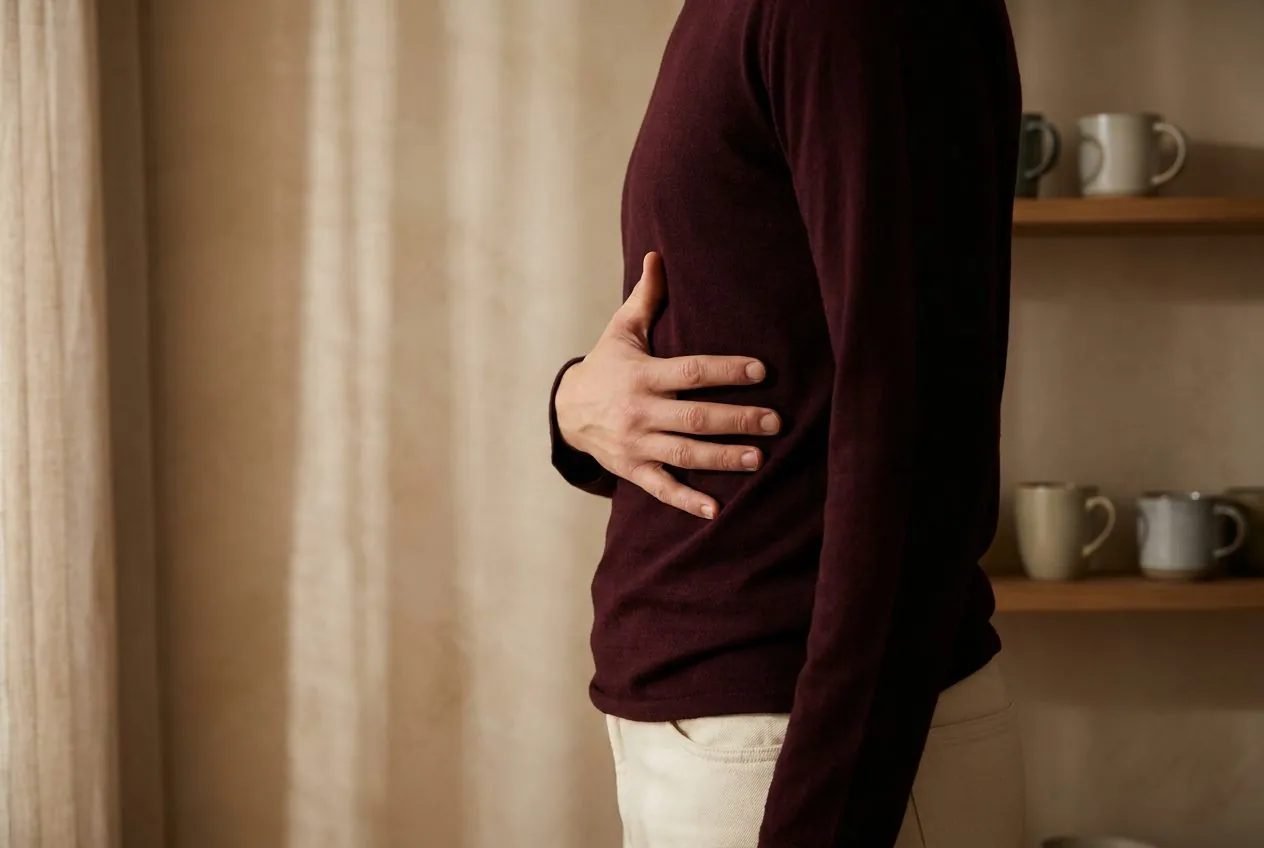
A hand resting on the lower ribs, following the breath

The breath can be followed with the hand – one of the exercises from Module 4.

To take with you

Ten worksheets

Each sheet belongs to a place in the course where writing helps more than watching. All ten, seven for the course and three as a bonus, are in your members area, individually or in one file, to download and print.

Worksheet 10: the map of feelings in the body – where a feeling shows itself before it has a name
Worksheet 9: the trigger diary – situation, thought, feeling and sensory perceptions in six columns
Worksheet 8: the first-aid pie chart – where your energy is flowing right now, and where you may let go
Worksheet 7: the weekly plan – morning routine and daily ritual, one week at a glance
Worksheet 6: the emergency-kit template – three skill chains for three levels of strain
Worksheet 5: the breath card in credit-card format, for on the go
Worksheet 4: the practice log – twenty-one days, one tool a day
Worksheet 3: the self-help matrix (basic level) – which tool helps in which nervous-system state, to hang on the wall
Worksheet 2: the reaction-pattern sheet – four fixed reactions and how you recognise them in everyday life
Worksheet 1: the thermometer card – where is your nervous system right now, and what helps it there?
  • The Thermometer Card (taking your temperature)
  • The reaction-pattern sheet
  • The self-help matrix (A3)
  • The 21-day practice log
  • The breath card
  • The emergency-kit template
  • The weekly plan
  • The first-aid pie chart
  • The trigger diary
  • The map of feelings in the body
Your guide

Gabriella Rist

Gabriella Rist

Gabriella Rist knows developmental trauma from two perspectives: as someone affected, whose body carried the traces of early injuries for decades, and as a professional who today accompanies others on their path.

For a long time she led a high-functioning life as an executive in an international corporation, until her body made clear how large the gap between functioning and living had become. She studied psychology and neuroscience, completed body-oriented trainings and continued her education internationally, among others with Dr Janina Fisher and Dr Bessel van der Kolk.

Today she is the founder of the GANESHASHALA® Trauma Academy for neurosomatic trauma support and has been accompanying people with far-reaching traumatisation for more than two decades.

Training and certifications

  • Traumatic Stress Studies (TRF)with Dr Bessel van der Kolk · Trauma Research Foundation, Boston
  • Complex Trauma Certification (CCTP / CCTP-II)with Dr Janina Fisher
  • Internal Family Systems (IFS) Trauma Treatment Programwith Dr Frank Anderson
  • Somatic Experiencing®after Dr Peter Levine
  • Trauma-Sensitive Yoga (TSY® Advanced Practitioner)inspired by Dr Bessel van der Kolk and David Emerson
  • Yoga therapy and Ashtanga (AYI® Advanced)with Dr Ronald and Melanie Steiner · BDY, RYT-500
  • Stress and relaxation educatorZPP-certified (Germany)

Out of this work an international network of trauma experts has grown – many of them have already been guests for expert talks on her German YouTube channel “Entwicklungstrauma & Nervensystem”. Her English channel is here.

70,000+ people follow her work on YouTube, Instagram, LinkedIn and Facebook; her videos alone have been viewed more than 1.6 million times. Her GANESHASHALA® Trauma Academy is the first trauma academy in the German-speaking world that addresses those affected directly. Her book Neubeginn jetzt (in German) will be published on 11 January 2027.

Her conviction, which also carries this course: change happens where lived experience and science confirm each other – in the body. The Nervous System Course grew out of her academy, out of exactly the modules with which her participants begin.

With warm wishes

Gabriella
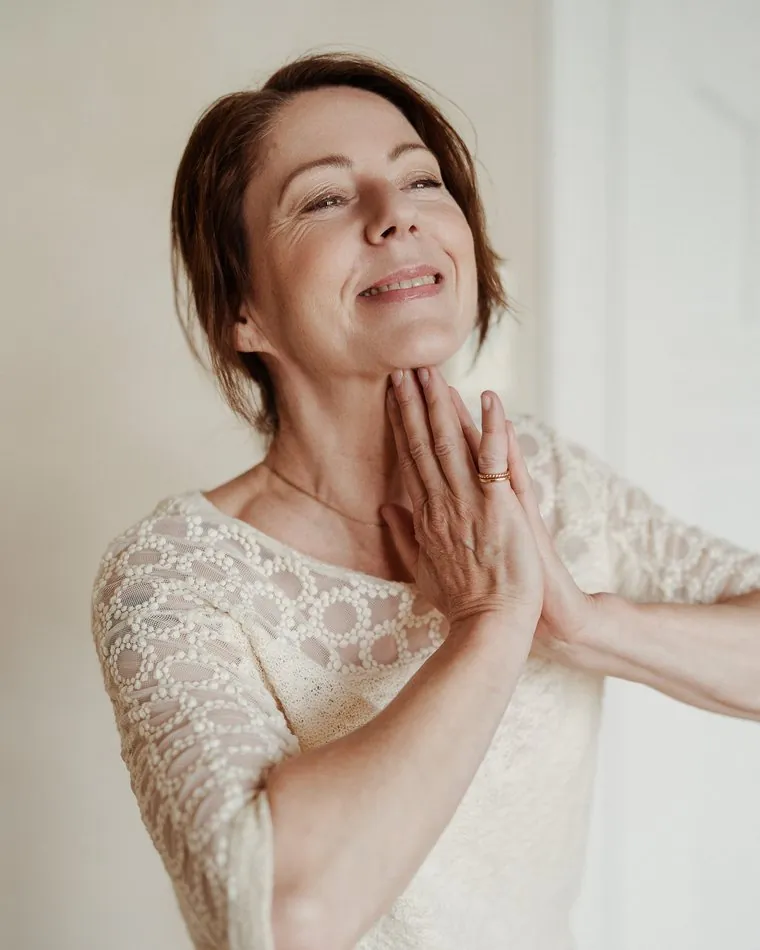
Gabriella Rist, hands in front of her heart
What changes

What you make your own in the academy

The moment in class

Your pulse shoots up, your thoughts narrow. You recognise your nervous-system state and reach for exactly the tool that fits you right now. Three minutes later you are back in the here and now.

The conversation in the evening

A sentence is said that would otherwise ruin the mood. This time you notice the reaction in your body before it overwhelms you, and you make a different choice than before. Today you know new ways of self-regulation.

The night without brooding

The mind comes to rest while your body hands over the watch and the control. For people who know this map of the nervous system’s reactions, this observation becomes an ordinary Tuesday. And sleep comes by itself.

A word in advance

Your life may stay as it is

This course fits into your life as it is right now. Tools that have room next to everything you already do – next to a full everyday life, next to everything that is going on. The shortest exercise takes 90 seconds.

The Nervous System Course

A price that excludes no one who really needs it – and that still means something. What costs nothing is rarely opened.

What you receive here is the essence of many years of work with people who know developmental trauma and complex PTSD – condensed into a path that stands on its own, in line with current knowledge on self-regulation and self-efficacy.
  • The Nervous System CourseFive modules, 47 lessons, 58 videos, around five hoursThe map of your nervous-system states, the ten tools your body already has and the Self-Help Matrix as the centrepiece — guided step by step, at your pace.Value: €499
  • Bonus 1Ten worksheetsSeven for the course and three as a bonus, to download, print and fill in — because it makes a difference to a nervous system whether the hand writes or types. They are ready for you in the members area.Value: €59
  • Bonus 2Access that does not expireAll five modules open immediately and stay yours, together with all future additions. Pay once, stay for good.Value: €99
Together a value of over €640
The course is open. If you book today, you are in straight away — all five modules and the ten worksheets are open.
€59one-off, incl. VAT · approx. US$68
Get access now
Secure payment via CopeCart · The charge is made by CopeCart
Frequently asked questions

Honest answers

Click to open – so that you read only what interests you right now.

Who is Gabriella Rist?

Gabriella Rist is a trauma educator, trained in yoga therapy (AYI® Advanced), and the founder of the GANESHASHALA® trauma academy for neurosomatic trauma support. She learned from leading voices of international trauma research – Dr Bessel van der Kolk, Dr Janina Fisher, Dr Frank Anderson, Dr Peter Levine and Dr Gabor Maté – and also knows developmental trauma from her own experience.

More than 51,000 people follow her German-language YouTube channel “Entwicklungstrauma & Nervensystem”; her English channel is “CPTSD & Nervous System”. The Nervous System Course is her entry-level course in self-regulation.

What is a nervous system course?

A nervous system course teaches how the autonomic nervous system responds to strain – and how these responses can be influenced consciously. This course proceeds in three steps: a map of your own nervous-system states, ten tools your body already has, and the matrix that connects the two.

It is intended for people living with developmental trauma, complex PTSD or ongoing stress – and for professionals who work with them.

Do I need prior knowledge or a diagnosis for the Nervous System Course?

The course is open to you with or without a diagnosis and begins with the basics: Module 1 gives first aid and, with the Thermometer Card, a first map; everything else builds on that. Some participants bring a diagnosis such as CPTSD, depression or an anxiety disorder, others mainly know a body that is permanently switched on: tension in the jaw, sleep that comes late. Relatives and professionals also find a way in here.

Does a nervous system course work online at all?

The tools in this course work through the body: through the breath, through movement, through muscle tone. What they need is repetition in everyday life – and that is exactly what the format supports. You practise where the strain arises: in the office, in the car, at four in the morning.

What goes beyond that – regulation in relationship – has its place in Lesson 2.4, co-regulation.

What is the difference between nervous-system regulation and self-regulation?

Nervous-system regulation is the autonomous ability: the body powers up and down again without anyone doing anything. Those who were allowed to grow up without severe strain bring it with them. After trauma or ongoing stress it is lost.

Self-regulation is the conscious path: you recognise which nervous-system state you are in, and give your body, from outside, the signal it cannot find from inside right now. With practice, the autonomous ability can return – which is why self-regulation is at the centre of this course.

How can I learn to regulate my nervous system?

Self-regulation can be learned, and it begins with recognising: which state is your nervous system in right now – high tension, freeze, or somewhere in between? Then comes the tool that fits exactly this state, and after that repetition in everyday life, because a nervous system resets through many small experiences of safety. How you can tell it is taking hold: the hands get warmer, the breath deepens by itself, the shoulders drop, and your gaze finds its way back into the room.

The Nervous System Course is built in exactly this order: Module 1 gives you the map for naming your nervous-system state, Module 2 the ten tools your body already has and the matrix that shows which one fits when. Many people who come to Gabriella have spent years trying to calm down without knowing where they stood – and that is exactly where the course begins.

How can I relax my nervous system quickly?

Under high tension – pulse up, thoughts narrow, jaw tight – a nervous system usually calms fastest through the body: through an out-breath that becomes longer than the in-breath, or by shaking off arms and legs so that the dammed-up energy can drain away. The shortest exercise takes 90 seconds, and after a few minutes you are, as a rule, back in the room. In freeze – numbness, shallow breath, cold hands – gentle activation is needed first, for example tapping or torso circles; a deep relaxation exercise would tend to deepen the freeze there.

That is why, in the course, the map comes before the exercise: a good tool at the wrong moment does the opposite. And if restlessness grows in the silence of all places, Module 1 explains why a survival system that has long confused vigilance with safety at first reads letting go as danger – and how wise this reaction once was.

How do I reset my nervous system?

A nervous system can be reset through the body – through movement that brings the energy of fight or flight to completion, through a breath that calms from inside, and through conscious pendulation between tension and rest until the wave subsides by itself. For this survival system works in waves: it powers up, and it powers down again. What many people experience as a “reset” is the return from alarm into the range in which the body can digest, sleep and connect again. A sign that it is working: a deep sigh that comes by itself, warmth in the hands, a belly that softens.

A body that has lived on alert for years usually finds the way back through many small returns – each one shows the inner guard that the way is known, until, with time, it can walk it by itself. In the course these ways are called pendulation and shaking off (Module 2), fullness and emptiness of breath (Module 4), and for the hard days a skill chain is built in the emergency kit, which you have with you before you need it.

How can I train my nervous system?

A nervous system learns through repetition, and it learns in small portions: 90 seconds several times a day usually leave a deeper mark than one long exercise once a week. Three things belong to the training – a fixed place in the day where the body regularly experiences safety, such as a morning routine; practising in calm moments, so that the tool is already familiar in the storm; and observing what works for you. With time, the threshold at which your inner guard sounds the alarm can rise, and the way back to rest often becomes shorter.

The course is built for exactly that: Module 4 guides you through the forms of breathing and the sequences from trauma-sensitive yoga, with a calming or an energising effect, in Module 5 your morning routine and your daily ritual take shape, and from your own observations your personal Self-Help Matrix grows, showing which tool works for you.

Can I learn to calm my nervous system with the Nervous System Course?

Yes, from the very first module. First you learn to recognise with the Thermometer Card in which nervous-system state your body is working right now: in high tension, in freeze or in the calm range in between. Then the ten tools your body already has are added, from pendulation and shaking off to sensory perception, each assigned to a nervous-system state. The shortest exercise takes 90 seconds, and with every repetition your body finds its way into calm a little more easily.

Why does my nervous system not calm down despite breathing exercises?

A breathing exercise works when it fits the nervous-system state. Under high tension, when the pulse is high and the jaw tight, a long out-breath often brings the body down noticeably. If, on the other hand, your nervous system is working in freeze, with heavy limbs, shallow breath and a feeling as if wrapped in cotton wool, deep breathing can shut it down even further. There, gentle activation helps first: standing up, feeling your feet on the floor, letting your gaze wander through the room. In the course, the chapter on this is called “The myth of relaxation and trauma”, and many who have already tried a great deal experience the difference at exactly this point.

What is the difference between calming the nervous system and regulating the nervous system?

Calming refers to the moment: a revved-up nervous system comes down, the breath lengthens, the shoulders drop. Regulating refers to the ability behind it, to find your way back into the calm range from high tension and from freeze, at your own pace and again and again. The course combines both: tools for the moment and a practice log for 21 days with which this ability grows in everyday life.

What does the course cost, and how long do I have access?

€59 once, including VAT. The access is yours with no expiry date – there is no renewal, no subscription and there are no follow-up costs. All five modules are open from the first day.

How quickly do I get into the course?

After your payment we set up your access; you then receive your personal access link by e-mail. With this link the whole course is open to you — all five modules with their 47 lessons. The ten worksheets are ready to download there.

How much time do I need per day for the Nervous System Course?

As much as fits into your day. The shortest exercise takes 90 seconds, and the tools work through breath, movement and muscle tone. That is why you can practise them wherever you are: at the office, in the car, at four in the morning. The videos add up to around five hours. All five modules are open straight away, and you set rhythm and pace yourself. If you take a three-month break, the course waits for you.

Why a course – and not one-to-one support with Gabriella?

One-to-one support is valuable, and the places for it are limited. The course makes accessible exactly the foundations with which any one-to-one support would also begin – the map and the tools – at a price that excludes no one. Anyone who looks for one-to-one support later already brings the best foundation.

I have already tried so much, and nothing has helped.

Gabriella hears this almost daily, and it usually has the same reason: the match between nervous-system state and tool was missing. A good tool at the wrong moment does the opposite. That is why the map comes first in the course, and the exercises come after.

Can I withdraw from the purchase?

When you buy, you expressly confirm that you want access immediately. With this confirmation the statutory right of withdrawal expires – this is what German law provides for digital content that is made available at once (§ 356 (5) of the German Civil Code, BGB).

That is why this page states so precisely what the course contains: five modules, 47 lessons, ten worksheets. And if anything is unclear, you are welcome to send an e-mail beforehand — better one question too many than a purchase that does not fit.

A still mountain lake in the morning mist – a resting point for the nervous system

Always tense, always on guard: Why your body stays on alert – and how you can lead it back out

Some people come to this page and notice that they would actually like to begin today. The course is ready for them.

To the course – €59

And if today is not yet the right moment: the course will not run away.